The history of the automobile is clothed in developments and progress, having its roots in the second half of the 18th century, even though there is no specific date that indicates its invention.
For many centuries, road transport was ensured by the use of animal-drawn carts and carriages. At a certain point we realize how important the invention of vehicles able to move autonomously could be, thanks to the appearance of the engine, so as to make movements more agile and faster.
The automobile, initially invented to replace animal traction, has made use of different engines over time depending on the power supply systems: from the steam engine to the internal combustion engine, powered by the most common fuel, gasoline, later joining other more innovative.
But let’s analyze the path that has marked the history of the automobile, leading it to establish itself on a large scale, with increasingly advanced tools.
A brief history of the automobile. Excursus
” One day you will be able to build chariots capable of moving and maintaining their movement without being pushed or pulled by any animal ” (Roger Bacon 13th century)
Well, about five hundred years before the invention of the automobile, an English scientist and philosopher had foreseen a revolution in the field of autonomous transport. Already in the Renaissance era, in reality, models of wagons that could move on their own were devised but these prototypes were never actually built. It will be necessary to wait until the end of the 18th century to see the first models of autonomous transport vehicles concretely realized.
Designed in 1769 by the Englishman Joseph Nicolas Cugnot , the ” Chariot of Cugnot ” was powered by a two-cylinder steam engine for a total displacement of about 64,000 cm3. Nicknamed “ fire-powered machine”, Reached a maximum speed of 10 Km / h, managing to proceed only for a dozen minutes. Although very short, this path is considered the beginning of the history of motorization, which, through subsequent developments, reached an increasingly complete stage. The main obstacle to be traced back to the first self-powered model consisted in the slowness of the steering and in the braking, still absent, in fact Cugnot’s chariot crashed into a wall. In 1771 another example was built, obtaining the first hoped-for results. Currently the first car prototype is kept at the Conservatoire National des Arts et Metiers in Paris, while a copy of it is on display at the Turin Automobile Museum .
It will take a hundred years to experience the actual progress that led to a real breakthrough in the automotive field. In this sense, the watershed occurred in 1876, thanks to the German engineer Nikolaus August Otto , who invented the first car with a four-stroke internal combustion engine : this system takes its name from the small explosions caused by the contact of the sparks created by the spark plugs with the gasoline . (the new highly flammable liquid fuel, which equipped the internal combustion engine with the carburetor), which occur inside the cylinders.
The main and decisive events in the history of the automobile followed one another in the 1880s. Ten years later Otto’s invention, in 1886, the German engineer Karl Benz perfected what he had invented eight years earlier: the first two-stroke internal combustion engine , while compatriot Gottlieb Daimler built a model independent of that of Benz. With Karl Benz we are thus witnessing the birth of the first real automobile, the Benz Patent Motorwagen of 1886, also nicknamed Velociped. Produced by the German car manufacturer Benz & Cie, owned by the German engineer, is the first car with a two-stroke internal combustion engine. Benz wanted to make a vehicle that was light and much more manageable than older steam-powered vehicles. The final car took on the appearance of a tricycle, patented on January 29 of the same year. The first road tests were not satisfactory, as the vehicle was unable to travel more than ten meters. So Benz worked to the limits, managing to increase the distance to about ten kilometers. A true record for the time!
Subsequently Daimler took the patented engine from Benz and installed it on a four-wheeled vehicle, the Daimler Motor Carriage of 1886. Thanks to the collaboration between Benz and Daimler, the Mercedes Bens was born forty years later. After the incredible work of the latter, in 1892 the German engineer Rudolf Diesel patented a new model that anticipated the construction of the first Diesel engine , while two years later Enrico Bernardi built his vehicle with a petrol engine, to produce which Miari & Giusti , the first Italian car factory, was founded. In 1899 the clutch was introduced.
Competition between different systems was skyrocketing, so the first car races were born, to show the progress to the public. Among these, the most famous was the Paris-Rouen .
The petrol engine was gaining ground but the speed record was recorded in 1898 with an electric car : on April 29, 1899 the Jamais Contente exceeded 100 km / h.
The petrol car became the most successful model only starting from the period of the First World War, always flanked by models structured and powered by other systems.
Starting from the first decades of the twentieth century, new tools were conceived to make driving more and more agile, effective and safe: in 1926 the first car with steering was born, while in 1935 the signaling arrows arrived, which contribute to reducing the number of accidents. In 1939 the first car with an air conditioning system was finally patented, to make driving more pleasant on hot days. In short, from the mid-eighteenth century up to the following two centuries, the car experienced notable progress, which made it the motorized model more and more similar to how it is known and marketed today.
Major car manufacturers and mass production
The first car factories were founded in 1883: De Dion, Bouton et Trepardoux in France and Benz & Cie in Germany. De Dion, Bouton et Trepardoux built in 1884 La Marquise, one of the first steam-powered motor cars, it reached a maximum speed of about 61 km / h. It is currently considered the oldest production car in the world.
But it was in the first decades of the twentieth century that Europe experienced a boom in car manufacturers, which produced the new motorized vehicle, still considered a luxury: Fiat (1899), Bugatti (1901), Lancia (1906) and Alfa (1910) in the made in Italy. In America , Henry Ford founded the Detroit Motor Company in 1898 , which later became the Ford Motor Company . Already in 1896 he had built a two-seater with four wheels, petrol powered and called Quadriciclo. It will be necessary to wait until 1903 for the first mass production, when the first Model A was sold, capable of reaching 70 km / h thanks to the two-cylinder engine.
It was from 1908, with the creation of the Ford Model T , that the automotive industry began the mass construction of cars, inevitably influencing civilization from the 20th century onwards. The world experienced a revolution in the manufacturing universe, which inevitably also influenced the history of the automobile. These were technological but above all social developments.
The American engineer and entrepreneur Frederick Winslow Taylor, in fact, developed a new theory on management: the scientific organization of production work was born, based on the performance of the man-machine binomial and on the study of the optimization of production times. The economic theory of “ Taylorism”Introduced innovative and revolutionary productivity standards, redefining the role of the worker in the new universe of mass production. Thus, from Taylorism to Fordism, the production of cars was opened that could be within the reach of the less affluent classes, thanks to the introduction of the “assembly line” which allowed an increase in productivity by lowering production times: with the use of conveyor belts in factories, workers performed the same task on all cars without traveling, thus shortening production times (from 12 hours / car to 93 minutes / car). So progress grew but, from the socio-human point of view, the workers became automatons.
A first diffusion of cars took place in Italy in 1936 with the birth of models such as the Fiat Topolino and in Germany with the Volkswagen Beetle.
The FIA T (Fabbrica Italiana Automobili Torino) was founded in 1899 in Turin. The original name was “Fia”, to which the “T” of Turin was added, approaching the Latin verb form “fiat” (che si fa). This great car manufacturer was the daughter of several founders, including the largest shareholder Giovanni Agnelli , a successful military, politician and entrepreneur, who headed it until the 1940s, then passing the helm to his nephew Gianni until 1996. The first the car, the Fiat 3 ½ HP , without reverse gear, was created in 1900. The meeting with Henry Ford was a huge inspiration for Fiat, leading to the improvement of the cars with the Tipo Zero model at the price of 8,000 lire. It will be necessary to wait until 1957 for the production of theFiat 500 , whose initial sale was made difficult by the high cost of 490,000 lire, then hit by a large success.
The other European states in which famous car manufacturers developed were France, with Peugeot, Renault, Citroen and Bugatti (which became French after the death of the entrepreneur Ettore Bugatti ). Germany again, with Volkswagen, Mercedes Benz, BMW, Audi, Opel and Porsche ; England, with Jaguar and Rover .
A brief history of the automobile: post-war developments
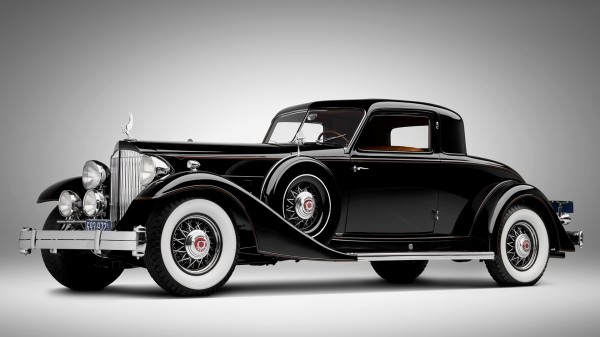
The second post-war period was the peak period for the history of the automobile, in the production of increasingly beautiful, powerful and luxury cars, capable of satisfying the increasingly refined needs of customers. The dismantling of the war industry and the economic boom favored the new large-scale diffusion of the automobile. Petrol had now become the most widely used fuel but the need for an alternative system arose during the oil crisis in 1973. Therefore, alongside the petrol system, diesel continued to assert itself. Subsequently, we witnessed the development of the electric and gas (LPG) cars, even reaching the production of the hybrid car, fueled by both petrol and gas, able to reduce emissions more.
The car then becomes a product that is increasingly rich in accessories linked to new functions and needs. For example, to contain the growing number of accidents, the legislation of the various countries introduces new technologies, such as that of seat belts and airbags (whose patent was filed in 1951 by John W. Hetrick). In 1970 the first car models with ABS system (integrated safety system that avoids the locking of the wheels, guaranteeing driveability during braking) were marketed. Ancillary innovations, such as the automated parking system or autonomous vehicle braking in case of danger, introduce autopilot. With the introduction of the Global Positioning System (GPS), the driver receives help in finding the optimal route to follow. Finally, in 2012, the road tests of the first cars that drive themselves begin: in this regard, the “ Google self-driving car ” should be mentioned.